A mobile-first, all-in-one theatre app
After learning from the first iteration — which tried to do everything at once and ended up a bit sloppy — this second version takes a more focused approach, starting with the features that matter most and building outward.
Phase 1: Rankings & Visualization
The original inspiration for building this app is a shared note that I have with a few friends, which we use to log and rank all of the shows we see (Broadway, touring, etc.), so I wanted this to be the first feature. In addition to a simple and clean interface for rankings the shows you've seen, a visualization cloud (similar to the theatre page on this site) is automatically created.
Phase 2: Shows vs. Productions vs. Visits
I wanted to refine the data structure before getting too far, and I eventually landed on distinguishing between shows, productions, and visits. Each show (e.g. Hadestown) can have multiple productions (e.g. Broadway 2019, West End 2024, touring 2021), and productions can have various visits (e.g. "saw the touring Hadestown production in Cleveland, OH on February 13th, 2023" and "saw Hadestown on Broadway on January 20th, 2025").
While I do think this is a solid structure for the backend, it's not exactly how users think about their theatre history, nor is it valuable for this data to be presented in a strictly hierarchical way. Rather, I decided that the primary pieces of information should ultimately be "Which show did you see?" and "Where/when did you see it?" when it comes to how the app displays this hierarchical data.
Rather than a bottom-up approach, where data becomes unusable if it's missing any fields, we can take a top-down approach, where the important info is guaranteed to exist and everything else is gravy.
For example, if I open the app and simply log that I saw Hamilton, then we have all the info needed to create a post that shows up in a social feed. This is much better than data becoming invalid just because one field was left out, even if everything else was manually added by the user. Providing a location has high value for low effort - since basically all other info can be inferred from a show, date, and location - but is still not strictly necessary.
This provides a low-friction experience with the option of adding more info, rather than a high-friction experience that requires maximum data input.
Phase 3: Social
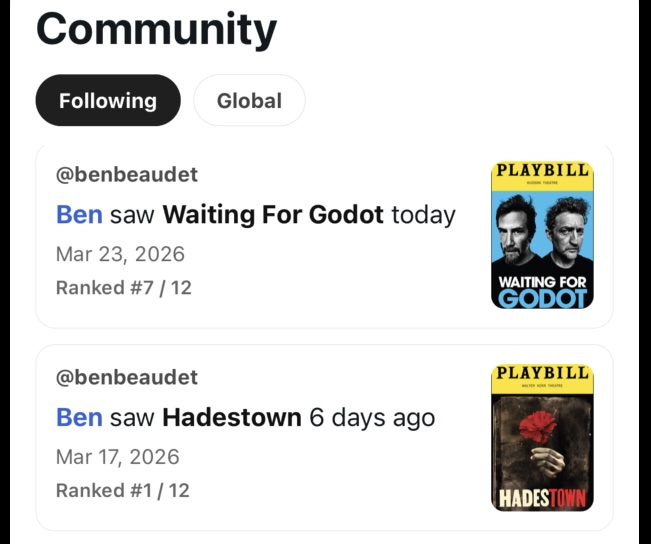
With the new data structure discussed above, a "social feed" feature becomes much simpler to create.
Users can follow other theatre lovers, post updates and thoughts on shows, and see what your friends are posting too.
Currently, "posts" are only created when adding a new visit/show, but the data structure is set up to allow all kinds of social updates in the future, e.g. edited ranking(s), added show(s) to list(s), liked/commented on others' posts, etc.
Phase 4: Future
Features such as trip planning, a ticket marketplace, a recommendation engine, and many more would bring this app away from just a "theatre diary" and more towards the "all-in-one theatre app" that I envision.
Technologies Used
- TypeScript
- React Native & Expo